
 Discussion
Pulmonary hypertension symptoms
Last updated Oct. 20, 2025, by Lindsey Shapiro, PhD
 Fact-checked by Jose Lopes, PhD
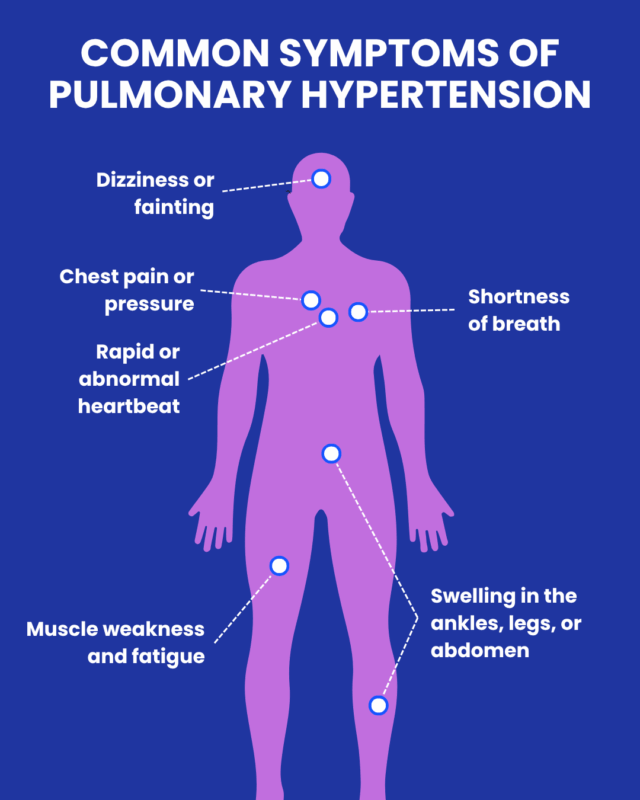
There is a range of possible pulmonary hypertension (PH) symptoms, with the most common including shortness of breath, excessive fatigue, chest pain, dizziness or fainting, racing heart, and swelling.
PH is characterized by high pressure in the blood vessels that carry blood from the heart to the lungs. This pressure restricts blood flow, limiting effective oxygen transport in the body and straining the heart.
The lung and heart symptoms that develop from this may initially be mild, but will progressively worsen without proper PH treatment. Advanced PH symptoms are usually related to heart failure and very poor oxygen circulation.
There are several possible PH causes. While the main signs of PH are generally similar across disease types, the underlying cause can influence exactly which symptoms a person experiences and how they’re likely to progress.
Common symptoms of PH
In the early stages, a person with PH actually might not notice any symptoms. However, over time, as oxygen delivery is increasingly compromised and the heart is strained or damaged, symptoms develop. They may be mild initially, but tend to worsen over time, making it harder to go about daily activities.
PH symptoms often start with shortness of breath, known as dyspnea, during exercise or daily activities. As it progresses, patients may feel short of breath even when they’re not active.
Other common signs of PH include:
- excessive fatigue and muscle weakness, even with everyday activities, because the heart and lungs are working harder to supply oxygen to the body
- chest pain or pressure, due to heart strain
- heart palpitations or racing, due to heart strain
- dizziness or fainting, when not enough oxygen-rich blood reaches the brain
- swelling in the ankles, legs, or abdomen, which is a sign of heart failure
Other symptoms of PH
A range of other symptoms can also occur with PH, especially as it progresses. These may include:
- bluish coloration of the skin or lips
- a dry cough or coughing up blood
- wheezing
- vocal hoarseness
- nausea, vomiting, or abdominal pain
- poor appetite
Patients who have another underlying disease that’s causing PH may experience additional symptoms related to that condition. For example, pulmonary arterial hypertension symptoms may include an enlarged spleen, spider angioma — blood vessels seen under the surface of the skin that resemble a spider’s web — or palm reddening when linked to an underlying liver disease.
When to see a doctor
The symptoms of PH develop slowly, and it may take some time before they become apparent. The earliest signs, such as shortness of breath during exercise, can be very mild and nonspecific, overlapping with many other serious and nonserious conditions.
Therefore, it is important to see a doctor whenever these PH warning signs or other unexpected symptoms arise. A clinician will perform additional tests to confirm a PH diagnosis or rule it out.
The earlier PH is diagnosed, the sooner effective treatments can start to slow its progression and relieve troublesome symptoms.
Pulmonary Hypertension News is strictly a news and information website about the disease. It does not provide medical advice, diagnosis, or treatment. This content is not intended to be a substitute for professional medical advice, diagnosis, or treatment. Always seek the advice of your physician or other qualified health provider with any questions you may have regarding a medical condition. Never disregard professional medical advice or delay in seeking it because of something you have read on this website.
Related articles
-
Discussion
-
 Discussion
-
 Discussion
-
 Discussion
-
 Discussion
-
 Discussion