
Chronic kidney disease affects many newly diagnosed PH patients, per study
Worse blood flow measures tied to greater odds of developing CKD
Written by |
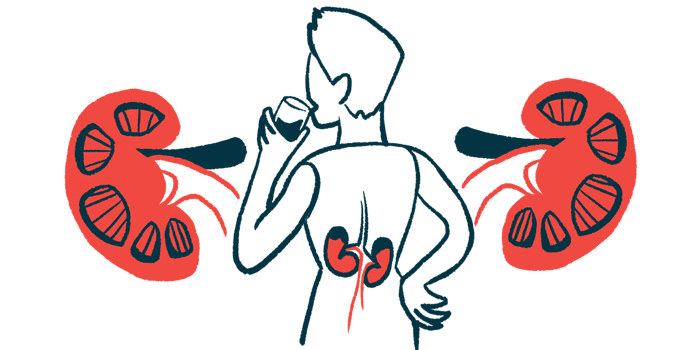
Chronic kidney disease (CKD) is common among people newly diagnosed with pulmonary hypertension (PH), and patients face an increased risk of developing CKD — marked by worsening kidney function over time — as the condition progresses, according to a new study.
The researchers found that certain blood flow measures, particularly higher pressure in the right side of the heart, were consistently associated with poorer kidney function and greater odds of developing CKD over the long term.
“As CKD has important prognostic implications for patients with pulmonary hypertension, this highlights the need for close attention to kidney function,” the scientist wrote. Close monitoring over time, the team added, “may help clinicians target therapies to preserve kidney function in pulmonary hypertension” patients.
The study, “Association Between Invasive Cardiac Hemodynamics and Kidney Function in Patients with Pulmonary Hypertension,” was published in the journal Kidney360 by researchers in Germany and the U.S.

PH is a group of diseases characterized by elevated blood pressure in the pulmonary arteries, the blood vessels that carry blood from the heart to the lungs. Over time, PH can strain the right side of the heart and may lead to right heart failure.
People with PH may also develop CKD, a condition in which the kidneys gradually lose their ability to filter waste from the blood.
Team seeks to ID risk factors for chronic kidney disease in PH
According to the researchers, the association of PH with CKD has been tied to an increased risk of death. However, the team noted that “little is known about risk factors for [the] development of CKD in patients with pulmonary hypertension.”
To learn more, the scientists analyzed data from COMPERA, a large registry of PH patients. The goal was to determine whether measurements of blood pressure and blood flow in the heart and lungs were linked to kidney function and the development of CKD in people newly diagnosed with PH.
The analysis used data from 9,195 patients diagnosed with PH within six months of enrollment in the database. The patients had a median age of 70, and slightly more than half were women. A total of 52% had pulmonary arterial hypertension, but all PH groups were represented in the study. Approximately 44% of the patients died during a median of 2.5 years of follow-up, the data showed.
Overall, the researchers determined that these PH patients had elevated blood pressure in the pulmonary arteries and increased resistance to blood flow. The team also found moderately reduced cardiac index, a measure that compares the amount of blood the heart pumps to body size.
Most patients also had significant limitations in physical activity, with 71% classified as having WHO functional class III and 15% as class IV, meaning they had symptoms even at rest, the data showed.

Loss of kidney function seen within 6 months of PH diagnosis
At the start of the study, 45% of the patients had mild to moderate loss of kidney function, the researchers determined. This was based on their estimated glomerular filtration rate (eGFR), a measure of kidney function. Mild to moderate loss was defined as eGFR lower than 60 ml/min per 1.73 square meters.
A further 23% had more severe loss of kidney function (eGFR lower than 45 ml/min per 1.73 square meters), the data showed.
Higher blood pressure in the heart’s upper right chamber and in the pulmonary arteries, as well as higher resistance to blood flow and lower cardiac index, were all associated with a higher prevalence of CKD, the researchers found.
During follow-up, 1,859 patients developed CKD stage 3a, and 1,905 developed stage 3b disease, according to the researchers.
The rate of new CKD was 16.3 cases per 100 patient-years for stage 3a and 10.9 cases per 100 patient-years for stage 3b. In other words, if 100 patients were followed for one year, approximately 16 would be expected to develop stage 3a CKD and 11 to develop stage 3b.
Understanding the mechanisms [of] what is causing kidney function declines in this population may help clinicians prevent or slow progression of kidney disease in these patients.
Overall, having worse blood flow measurements was associated with a lower eGFR, indicating worse kidney function. But when all of these measurements were considered together, only higher pressure in the right side of the heart remained consistently associated with lower eGFR, the researchers noted. Specifically, every 5 mmHg increase in right heart pressure was associated with a 12% higher risk of developing CKD.
The researchers noted that right heart pressure was the only blood flow measure consistently associated with lower kidney function and CKD development. The team suggested that this may reflect the role of congestion — a buildup of fluid in the lungs — in PH.
Altogether, these findings add to previous research linking congestion and higher right-heart pressure with impaired kidney function. According to the researchers, the results “lend consistency to the prior results” showing a link between right atrial pressure and lower eGFR/CKD.
“Understanding the mechanisms [of] what is causing kidney function declines in this population may help clinicians prevent or slow progression of kidney disease in these patients,” the team concluded.
Still, the scientists cautioned that, as COMPERA is an observational registry, other factors that were not measured, as well as differences in treatment, may have influenced the results.


Leave a comment
Fill in the required fields to post. Your email address will not be published.