Tips for exercising safely with PH
 Fact-checked by
 When you are living with pulmonary hypertension (PH), exercise may not seem like something that you can do safely.
After all, the most common PH symptoms, such as shortness of breath, excessive fatigue, and a racing heart, can make any type of physical activity feel risky.
But depending on the severity of your PH symptoms, exercise may help PH symptoms. If you follow an exercise routine created with medical guidance, you may be able to help improve your strength and endurance while also increasing your lung, heart, and muscle capacity.
Setting up a safe exercise routine
Before starting any exercise routine, always consult your PH care team, who can help set guardrails so you can move with confidence.
Your doctor may start with a cardiopulmonary exercise test to see how your heart and lungs respond to movement. This helps your team set heart rate and oxygen levels that are safe for you. They may also refer you to a cardiac or pulmonary rehabilitation center for more expert guidance.
A pulmonary rehabilitation specialist will assess your current level of physical fitness.
The specialist may use a six-minute walk test to measure your starting point. By seeing how far you can walk comfortably in six minutes, your team can track your progress over time and decide whether you need supplemental oxygen during exercise.
They may also evaluate if your blood pressure in the lungs spikes too high during exertion and puts extra strain on the heart, which is known as exercise-induced pulmonary hypertension. This will help determine whether you need to monitor your oxygen levels during exercise.
After setting your starting point, your care team will then work with you to find the safest exercises for PH, such as walking drills and light resistance-band work, as well as breathing techniques. You may be referred to a pulmonary rehabilitation program to learn more about your lungs and how to exercise safely.
The Pulmonary Hypertension Association has a list of questions to ask your PH team as you decide on the best PH exercise plan for you.
At-home exercises for PH
Along with showing you safe exercises for PH, your PH specialist should help you find exercises that you can do at home.
These may include:
- flexibility and breathing exercises, such as yoga and stretching while seated
- strength training exercises, such as lifting with light dumbbells and using resistance bands
- aerobic exercises, such as walking on a treadmill and stationary biking
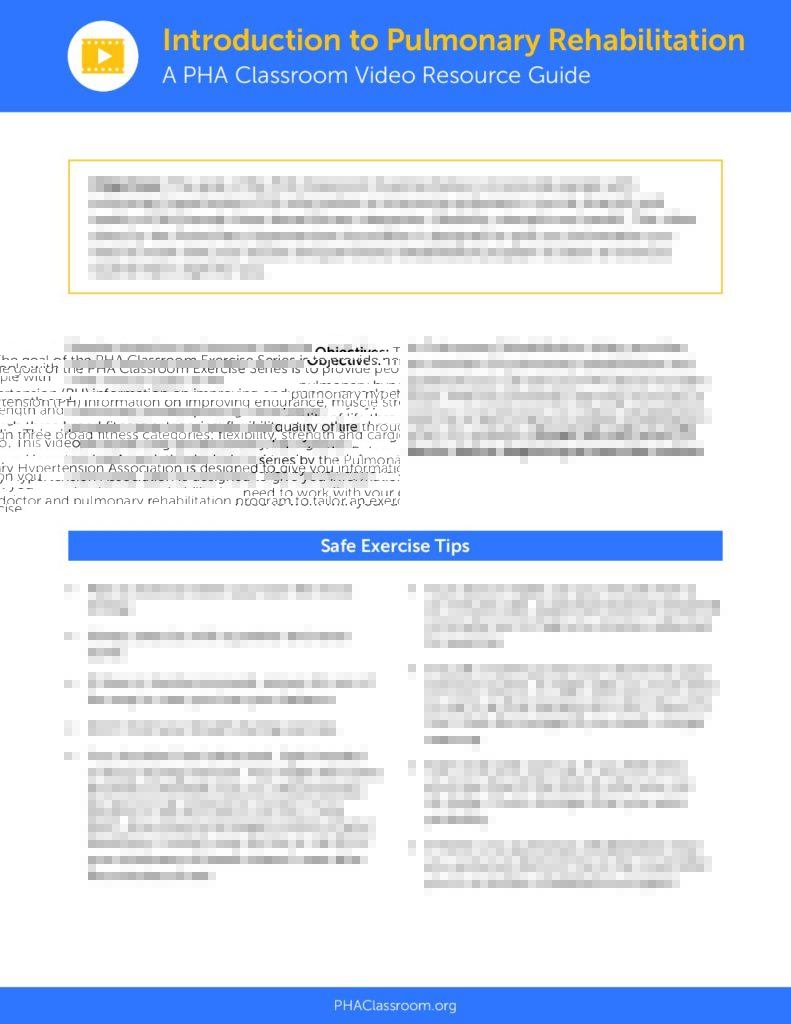
Tips for exercising safely
When exercising at home, warm up and cool down as part of your routine to help your heart rate and blood pressure adjust gradually. This can reduce your risk of becoming dizzy and prevent sudden changes in blood pressure.
Avoid exercising outdoors in extreme heat or cold. Extreme cold can cause blood vessels to narrow, increasing the pressure in your lungs, while extreme heat forces your heart to work much harder to keep you cool. Both put unnecessary strain on your heart and lungs, and make it harder to keep exercising safely with PH.
Immediately stop exercising if you have dizziness, chest pain, pounding heartbeats, or severe shortness of breath. These are warning signs that your body is under too much strain. You may feel some shortness of breath, but you should always be able to talk and feel in control.
Contact your doctor or call 911 if your shortness of breath doesn’t ease after five minutes of rest.
Other safety tips include:
- timing your workouts for when your energy is at its peak
- exercising with a partner, in case you need help
- keeping breathing steady and never holding your breath
- beginning gently, then slowly ramping up duration, repetitions, and effort
- stopping or skipping any movement that causes pain or discomfort
- staying hydrated
By following these tips, you can exercise safely with PH and make it a positive, supportive, and manageable part of your regular routine.
Pulmonary Hypertension News is strictly a news and information website about the disease. It does not provide medical advice, diagnosis, or treatment. This content is not intended to be a substitute for professional medical advice, diagnosis, or treatment. Always seek the advice of your physician or other qualified health provider with any questions you may have regarding a medical condition. Never disregard professional medical advice or delay in seeking it because of something you have read on this website.